Material and mark validation
We evaluate real samples across CO2 and fiber source options, then document lens, speed, power, focus, airflow, and cleaning notes so the approved result can be handed to production without guesswork.
Buying a laser is only the visible part of the project. The work that protects output quality happens around the machine: material testing, exhaust planning, fixture selection, operator routines, file preparation, and maintenance intervals. Epilog Laser support is organized for teams that need a direct answer, a measurable setup, and a process that can be repeated by more than one operator. The service path starts with the part, not a generic machine pitch. We review substrate, coating, part size, desired contrast, acceptable cycle time, available floor space, and whether the work is one-off personalization or recurring batch production.
Each pillar below isolates a different operational decision rather than repeating the same sales promise. Together they cover the steps that keep an engraving result repeatable once the machine reaches the shop floor.
We evaluate real samples across CO2 and fiber source options, then document lens, speed, power, focus, airflow, and cleaning notes so the approved result can be handed to production without guesswork.
Laser engraving produces fumes that vary by substrate. A service review maps duct length, extractor sizing, filter access, room airflow, and daily material mix before the machine arrives.
For tags, tumblers, serialized parts, and irregular blanks, repeatability comes from workholding. We define locating surfaces, rotary attachment needs, and operator loading steps.
Training focuses on file setup, focusing, job queue control, material settings, lens care, and safety routines. The goal is a clear shift-ready checklist, not a classroom lecture.
Lens, mirrors, belts, tubes, filtration, and motion components are reviewed against use intensity. Preventive schedules are kept practical so uptime is protected without over-servicing.
Every recommendation is tied to an operating checkpoint. The numbers below are planning categories used during a service review, helping teams compare system classes, facility readiness, and training depth before purchase orders or installation dates are fixed.
Source, lens, focus, and airflow are documented together so a material profile does not depend on memory.
Power, exhaust, and bench or floor layout are reviewed before installation to reduce late surprises.
Startup and shutdown steps keep optics, exhaust, and work area habits consistent across shifts.
Approved settings, sample photos, and part notes stay together for future repeats and staff changes.
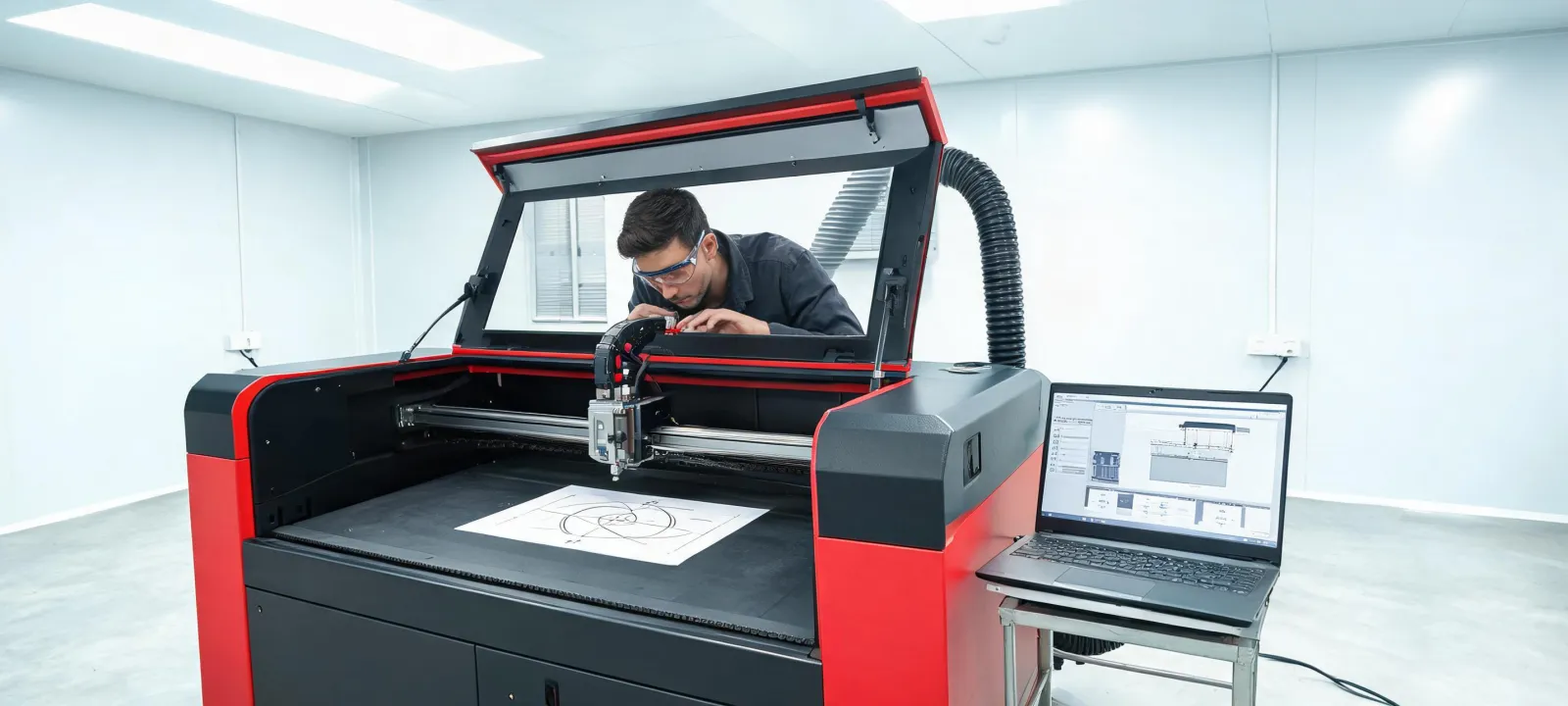
A short review can separate a simple engraving setup from a fixture, extractor, or fiber-marking requirement. Share the job details and we will respond with the next practical test.
Request Service Review